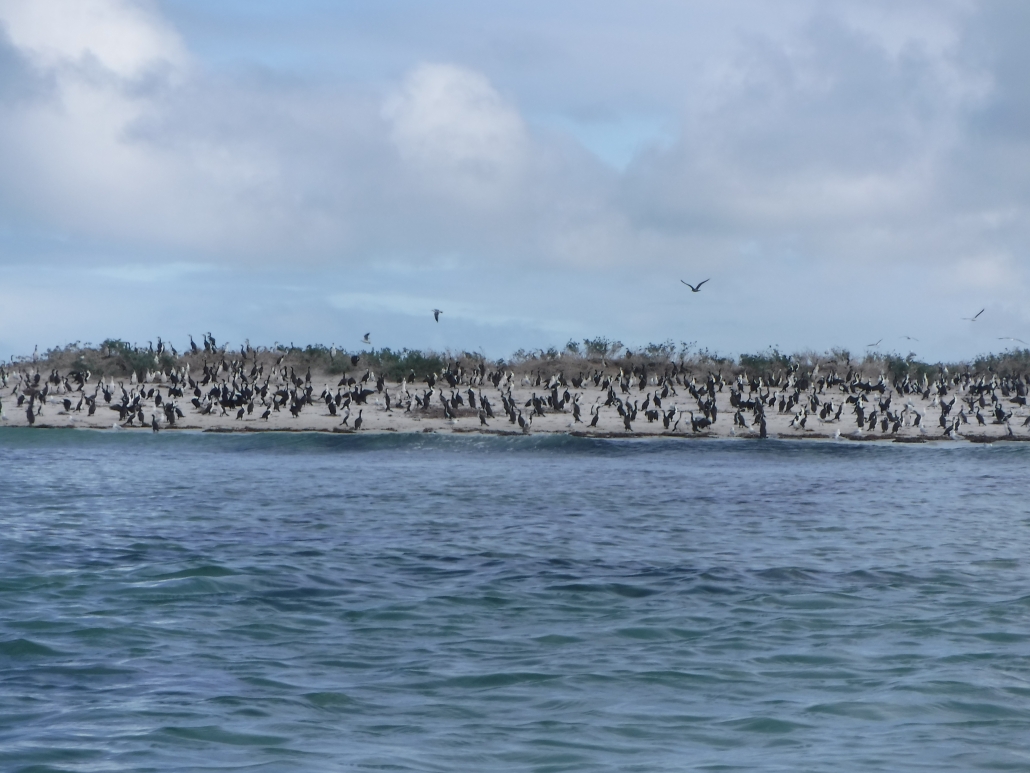
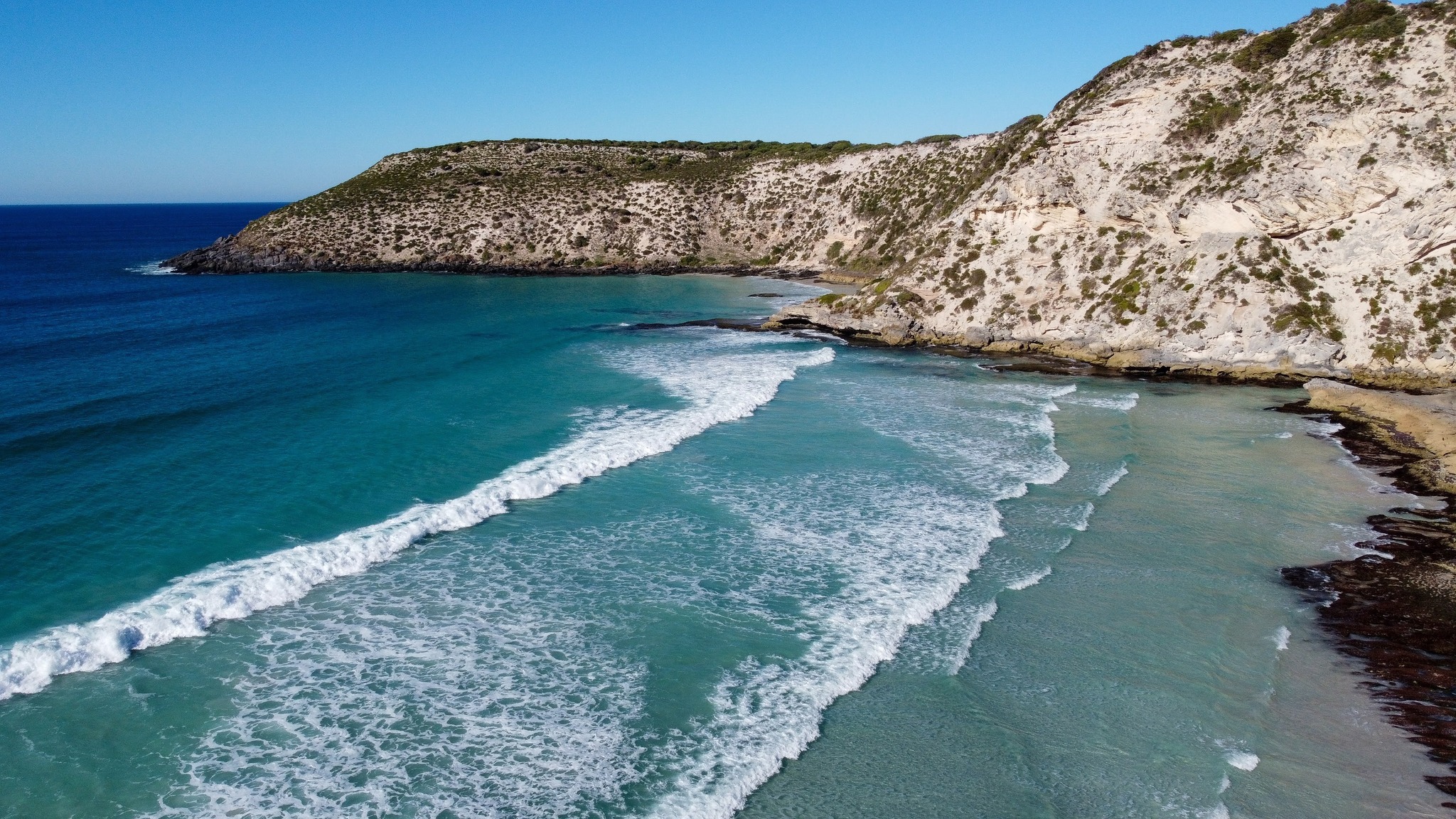
Myponga Beach to Carrickalinga Point Sunday — 3 Dec 2023

Perfecrt Day for a Paddle

Perfect weather, a beautiful place to paddle, great company and dolphins; could you ask for more?

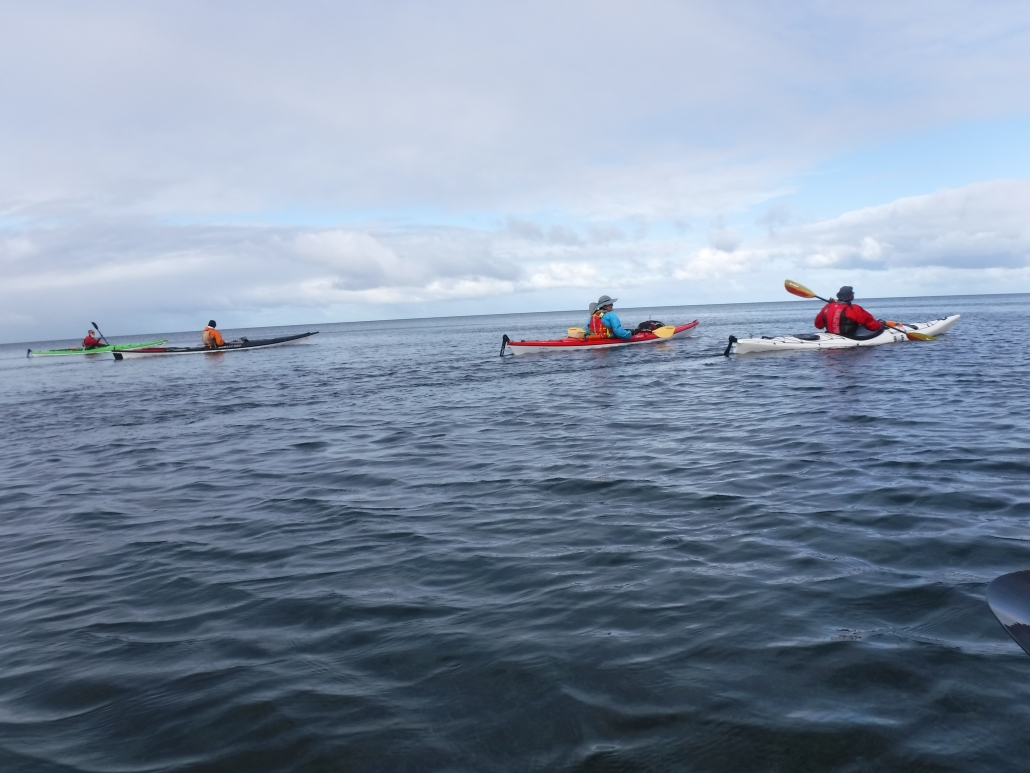
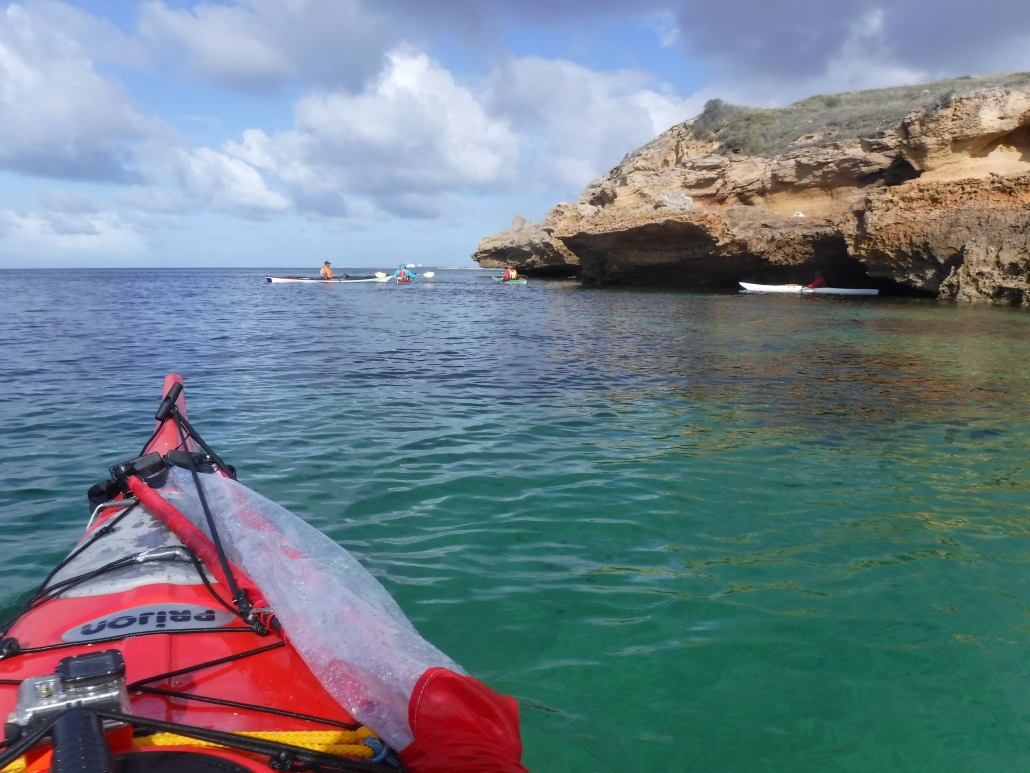
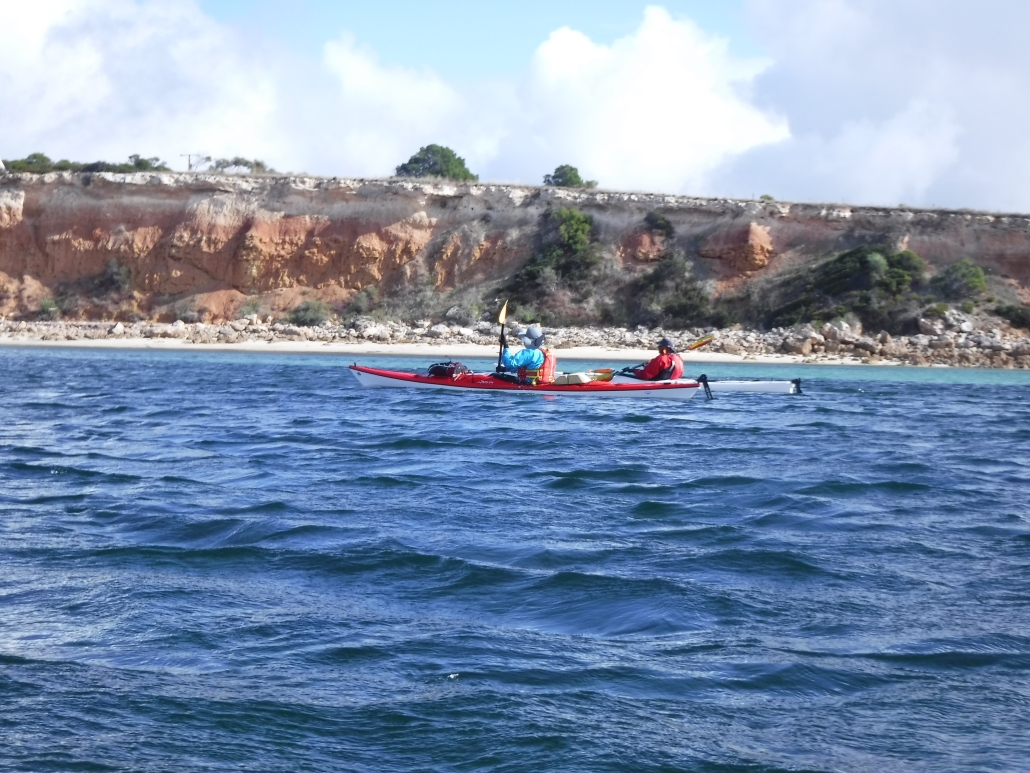
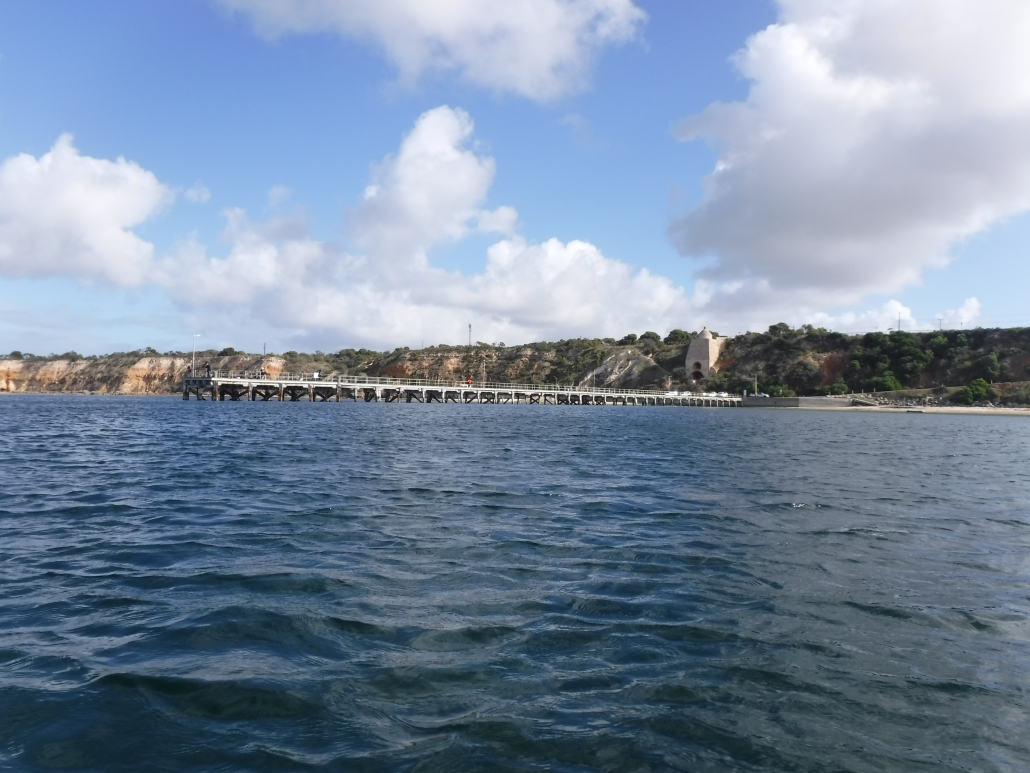
Mark, Berny, Marius and Terry joined Anne and Simon at Myponga Beach to paddle south along the coast towards Carrickalinga. With almost zero swell and beautifully clear water we had fun playing in the rock gardens and visiting a couple of caves along the way. Some rocks were ‘touched’ and one Mark found himself stuck on until the next swell lifted him off, but all that just added to the fun of the paddle.

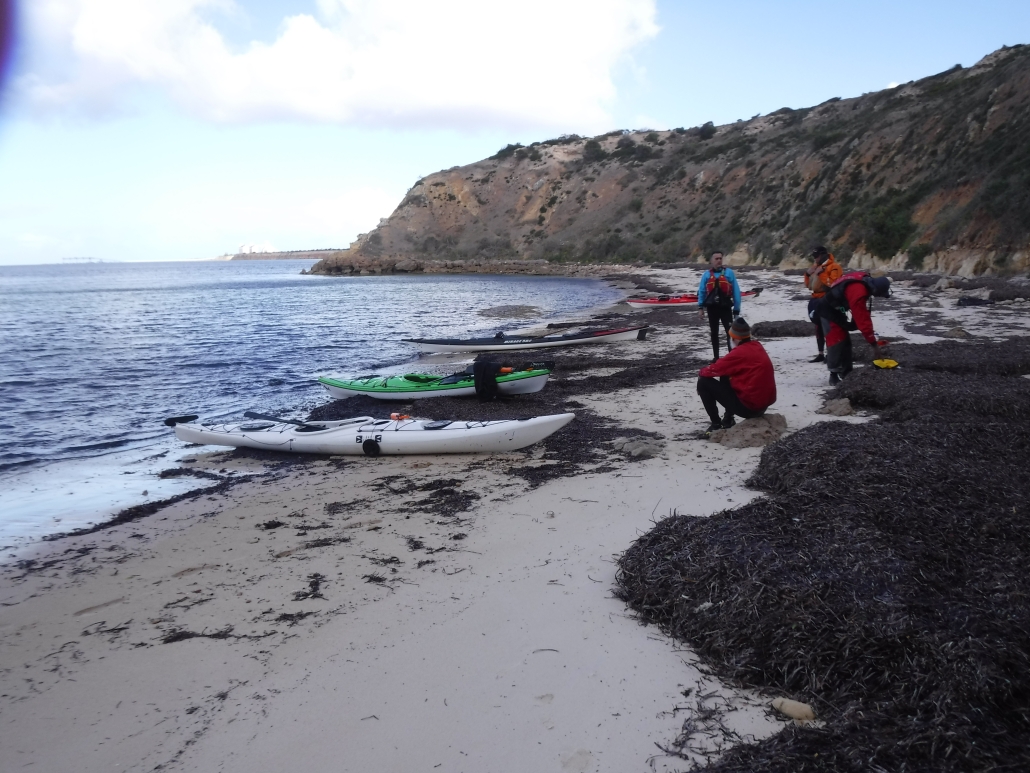
After practicing a few rolls we landed on the little beach below Carrickalinga Point for lunch. On our return paddle we spotted a large pod of dolphins that seemed to be in a feeding frenzy, circling around and coming to the surface often.

The tide had dropped significantly by the time we landed back at Myponga Beach so there was a longer carry getting the kayaks back to the cars. Rinsed off, changed and packed up, we headed to the Myponga Bakery for a well-earned afternoon coffee.

Statistics (Links to GPX file)

Sunday 3 Dec 2023 — 15km return over 5.15 Hrs


Innes National Park, November — 4th and 5th November 2023

I first visited Innes National Park-Dhilba Guuranda more that 40 years ago as a surfer, then scuba diver and now as a sea kayaker. Although the inland nature of the park is more manicured to pamper the modern camper the coastline is unchanged, wild, visually stunning, partly inaccessible from land and challenging to sea kayak. The rolling swells, ocean winds and currents are ever present factors to be considered in planning and when paddling.

As the weekend approached the weather and swell forecasts looked ideal for a sailing and sea kayaking adventure of great proportions. Winds up to 15 knots and low swell for this region. The plan was to camp at a favourite site called Shell Beach over Friday and Saturday nights and to paddle Saturday and Sunday.

Saturday

On Saturday morning all the group members had arrived at Shell Beach. Karl, Chris, Charlie and myself on Friday and Abelardo on Saturday.

Saturday’s paddle plan was to explore from Cable Bay around the very exposed Cape Spencer then northwards to Pondalowie Bay having a look at an amazing feature called The Gap and nearby Howling Cave Beach on the way. Given the forecast of ideal winds we decided that paddling all the way back to Shell Beach was also achievable. The total distance being a bit over 20 kilometres. Great plan.

On arrival at Cable Bay the wind was gusting over 20Knts from the south east and the promise of a sunny day was just that…a promise. It was heavily overcast and quite cold. Not deterred all paddlers were keen to give it a go and quickly prepared their craft and kit.

The launch was easy with no waves breaking on the beach. I had selected each launch and landing site carefully to minimise the chance of breaking waves.

Karl had paddled the day’s route several times and was elected to lead out through the small reefs and bombies. There was quite a bit of apprehension in the group calling for a cautious approach to this section and a tight group structure. A capsize could have occurred at any moment in the confused seas which reached their most challenging rounding Cape Spencer. The swell was coming from several directions and rebounding from the rocky shoreline. Charlie rated this section a BLACK ZONE on the new ACC rating system! We were all relieved to get around to the western side of the Cape and into less demanding conditions. It was a downwind run to The Gap and Howling Cave Beach but with the wind gusting over 20Knts it was decided not to hoist the sails just yet…we were travelling plenty fast enough!

The Gap

The Gap is an interesting coastal formation where erosion has carved a huge “amphitheatre” into the high cliff line. Begin in a more sheltered area we were able to explore inside the feature. Stunning high vertical sandstone/limestone cliffs all around!

Howling Cave Beach sounds like a place you just have to visit if you have an adventurous spirit. The small bay was very sheltered with only a tiny wave breaking on the beach, so we landed for an enjoyable lunch.

After lunch it was a fast paddle with sail up past Ethel Beach and West Cape to find another sheltered beach just inside West Cape to land and stretch the legs. From here we could look towards Pondalowie Heads and the numerous breakers between us and the next sheltered bay. We cautiously picked our way through these keeping an eye to seaward for “sneakers” at all times.

Crossing Pondalowie Bay to Royston Head was a real slog with side winds to 20Knt. It was such a relief to find a perfect and sheltered sandy beach on arrival. We landed for an extended rest and photo opportunity producing some awesome pics!

The final leg back to Shell Beach was something I had been dreading as it would be a slog straight into the wind. It turned out to be the best part of the day! The coast was littered with rock gardens covered with stunning growth. By staying in amongst the rocks we could avoid the wind and enjoy the challenge of manoeuvring through the gaps and riding the surging waves.

Upon reaching Shell Beach two big challenges awaited…getting the kayaks up the steep steps to the campground and retrieving the cars from the launch site. These were achieved with a minimum of fuss and a well-earned meal and wine finished off the day.

Sunday

Sunday morning brought sunshine but persistent strong ESE winds. We agreed that the original plan of another 20Km day was a bit optimistic and would not lead to a fun day’s paddling. With the winds further to the east there would also be no sailing. We opted to go search around Corny Point for some nice coastline to explore.

After another leisurely breakfast we headed to Berry Bay where a large number of school students were enjoying a surf lesson in the beautiful small waves and offshore winds. Quite ideal really apart from the steep and long set of stairs from the carpark to the beach. We’d done enough hoisting kayaks yesterday so needed another option. Karl had noticed and other beach with access on the way and went to check it out.

He arrived back with good news. Gravel Bay looked ideal with a 4WD track down to a sandy beach and no breakers. Our plan became to launch from Corny Point township, head west and downwind around Corny Point, south along Berry Bay to exit at Gravel Bay. All up about 9 Km which would lead to a reasonable landing time to begin the drive back to Adelaide. Perfect for how we were feeling.

Once at Corny Point township it was close enough to lunchtime to get some pies, sandwiches and iced coffee’s from the general store and then it was off to the beach boat ramp.

Launching

The beach launch was quite stunning with pure white sand, crystal blue sea and a huge sandbar that required some walking before paddling. Corny Point was one of the highlights (amongst many) for the trip.

Paddling down along spectacular Berry Bay with it’s pure white sands we encountered dolphins and seals. It wasn’t long before we had paddled and drifted down to Gravel Bay surrounded by rock gardens with plenty of growth clinging to the outcrops. This brought the end to paddling for the day. We piled into Chris’ minivan and back to the launch site to retrieve other vehicles, load up and began the trip back to Adelaide. A very satisfying weekend of adventurous sea kayaking and camping.

Report by Phil Doddridge, photos by Karl Meyer

Overall Statistics (Links point to GPX files)

Saturday 4/Nov Cable Bay – Shell Beach 24.5Km

Sunday 5/Nov Corny Point to Gravel Beach 9.77 Km

Explore Second Valley and Coastline South by Sea Kayak — Sun 17 September 2023

Paddling Second Valley to Rapid Head Coastline

Beach Master at Work

The Fleurieu Peninsula (in particular the coast south from Second Valley into Rapid Bay and down towards the Starfish Hill Wind Farm) never ceases to amaze me. Our paddle on Sunday confirmed we should be paddling there more! Eleven (11) Club members joined Bernard and Frances leading in their Delta T to enjoy this stunning stretch of South Australia’s coastline.

Paddlers were Bernard and Frances Goble, Simon and Anne Langsford, Mark Loram, Charlie and Marina Walker, Shauna Ashewood, Michael Grundy, Anthony Aardenburg and Berny Lohmann.

It’s lucky the paddlers arrived at all! Some had to navigate the closure on Anzac Highway due to the City to Bay event.  The South Road underpass was the only viable route for crossing the Highway if coming from the north. When we arrived, Second Valley Jetty and car park were busy with people making the most of the stunning day.

Briefing and Departure

Birds at Old Jetty

Bernard briefed the group on the paddle plan and safety precautions as well as suggesting the best locations (eg Investigator Strait) to check BOM weather for paddling in this area of the Peninsula.  After unloading and packing kayaks we were on water about 9.30am. We set off heading south of Second Valley Jetty, ensuring we were well clear of fishing lines and nearby rock platforms. We paddled towards the small beach just south of Rapid Head for lunch.

GoPro Action Footage

It’s very easy to see why this area is so popular. It wasn’t long before we were admiring the stunning rock formations leading towards Rapid Bay. Charlie took the opportunity to sneak into any rock crevice for some action shots with his GoPro. Check out his video on our YouTube Channel below.

The Paddle South

Conditions were suitable for the group to spread out a little and make the most of the paddle, whether looking for sea eagles, seal pups or just soaking up the stunning scenery.

We gathered up the group at Rapid Bay then headed towards the Jetty. The normally turquoise coloured water in the bay looked churned up and creamy – evidence of recent swell.

Manoeuvring Practice

We made our way to the old Jetty with Bernard suggesting some manoeuvring practice doing figure of eights around the jetty pylons. A large flock of seagulls looked on to see who was disturbing their territory. We were careful as the jetty continues to deteriorate, but it looked safe enough as long as we avoided colliding with the pylons – good incentive for perfect manoeuvring.

The original jetty was developed and worked by BHP from 1942 until 1981, with the quarried limestone being shipped to BHP’s steelworks at Whyalla, Newcastle and Port Kembla where it was used for steel production.

Seal Pups at Rapid Head

Rapid Head Seal Pups

After working on our skills we headed further south to Rapid Head. We checke out the numerous seals, caves and magnificent geological folding that can be viewed from the water. Plenty of seal pups around but mostly warming themselves on the rocks or playing in the shallows. They normally tend to investigate and follow our kayaks, however not this time. I wonder why?

There must have been a heavy SW swell over winter as the small sandy beach has disappeared. After a short break we headed back towards Rapid Bay for lunch.

Big Wave Rescue

Rescue Underway

There was reasonable rebound close to cliffs with underlying swell rising up when reaching shallow water. As Bernard mentioned at the briefing, always keep one eye to sea for that unexpected larger wave rolling in – and one did! Most of the group managed to turn their boats towards the 1.5m wave however one of the group just wanted to practice support strokes (more practice required?) followed by a rescue. It may not have been planned, but always good to practice.

Lunch at Rapid Bay

Paddlers with Stunning Rock Formations

Returning to the northern end off Rapid Bay for lunch there was an opportunity to practice surf landing skills with small breaking waves. After everyone was safely on the beach we enjoyed lunch in the shade of the large cavern – if only the walls could talk! During lunch we talked about recent kayaking experiences and some of the kayaking skills required for paddling around Second Valley and Rapid Bay.

Towing Practice

Once back on water Bernard decided to get the group participating in a tow, ensuring we were well positioned around our ‘ailing paddler’. He gave several in the group an opportunity to tow or assist with supporting the towed kayak. We had a couple in the group who had not participated in towing before so this was a beneficial exercise.

Getting ready for Tow

Supporting Towed Paddler

Completion and Coffee

Safely back on Second Valley beach about 3.00pm and soon packed up after another very enjoyable day padding. Looks like the average Strava track shows we covered 14km, with a few twists and turns.

Finished off a very enjoyable day with coffee at the café in the Second Valley Caravan Park. This led me to think that we must spend another weekend based at the Park and explore more of the stunning coastline.

Many thanks to Bernard for organising and leading the trip.

Cave near Stansbury

Plan B Paddle – Port Vincent to Edithburgh and then Troubridge Island — 27 – 29 May 2023

Early Arrival at Port Vincent

The original Plan A was to paddle out to Wardang Island and spend a couple of nights camped on Goose Island but the weather failed to cooperate, so Phil as Trip Leader suggested a Plan B, paddling on the eastern side of Yorke Peninsula from Port Vincent to Stansbury and then Edithburgh while car camping at caravan parks and visiting the local pubs for dinner. Then on Monday a return trip to Troubridge Island if conditions were suitable.

Winds were forecast W to WNW over weekend, generally below 15Kn so the east coast of Yorkes offered more protection by paddling close inshore. We ended up with 5 members booked from the original 11: Phil, Simon, Abelardo, Giresh and Mark opted to explore the coastline we hadn’t paddled previously.

It was good to form our own opinions of this section of the coast after hearing varied opinions.

Phil and I drove down on Friday and checked into Port Vincent Caravan Park, a well setup park with unpowered sites protected from westerly winds.
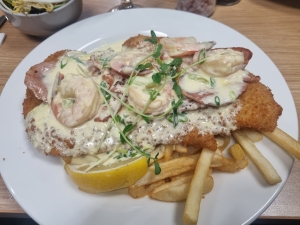
Squid Snitzel at Pt Vincent

Squid Schnitzel at Pt Vincent

Once settled in we took the opportunity to catch up with local Adelaide Canoe Club members Carol and Robert.  We discussed possible Club involvement in the Salt Water Classic event planned for April next year, when a flotilla of wooden boats and kayaks will be sailing, rowing, motoring, and paddling from Stansbury to Port Vincent, taking advantage of the flood tide on the day. Robert took the opportunity to show us his wooden boat collection which was very impressive (as you can see in the pictures).

Carol and Robert offered to help with the car shuttle when we arrived at Stansbury and also recommended the Dalrymple Hotel there, but emphasised that we had to make a reservation –  nothing like local knowledge!

An easy walk to the Ventnor Hotel on Friday night – excellent squid schnitzel, comparable to our visits to the St Kilda Hotel when paddling Barker Inlet.

Day 1: Port Vincent to Stansbury 

Paddlers before launching in Pt Vincent

Paddlers before launching in Pt Vincent

The rest of our group arrived at the Port Vincent Yacht Club about 10:30am on Saturday, a nice easy location to launch just adjacent to the Port Vincent Kiosk – very handy for coffee and a range of seafood – and noted for future trips.

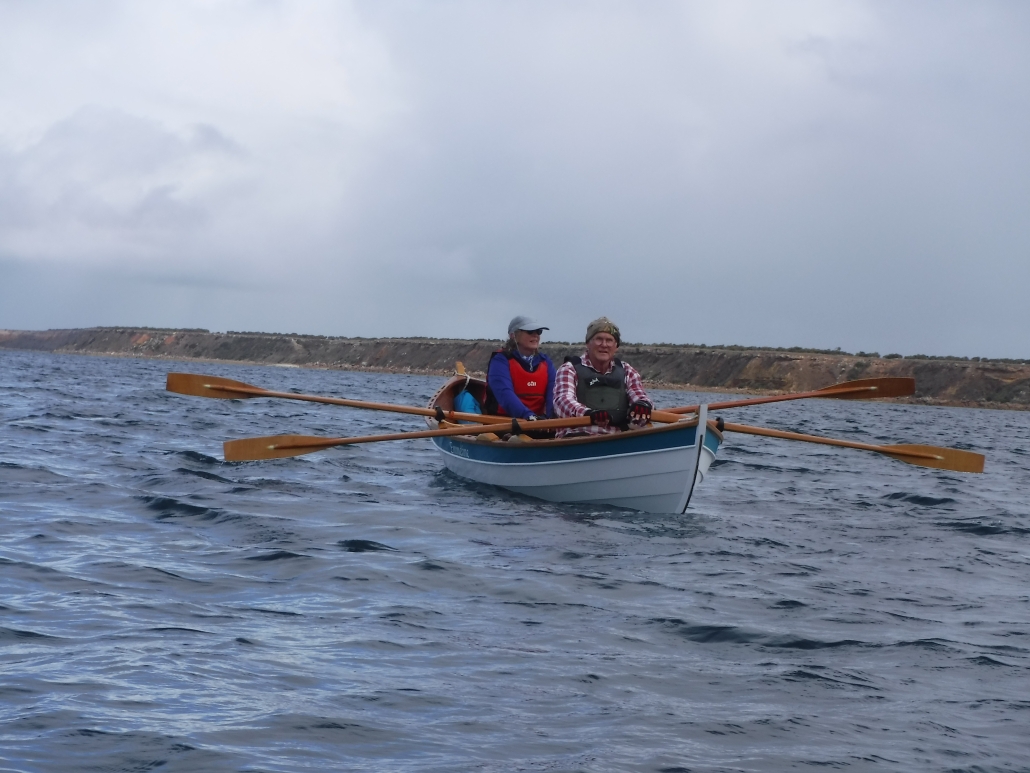
Robert and Carol soon joined us and after introductions and a couple of pictures we were all on water about 11.40am. They had arrived in their 16´ ‘Double Ender’ wooden boat, lovingly built by Robert from plans by Doug Hyland of Maine, USA which were styled after the lobster boats used in the area about 100 years ago. The day was a bit overcast and wind around 10kn W so best option was to hug the coast as we paddled south.

Robert and Carol easily kept up with the kayaks and looked great on water, reinforcing the attraction of the concept for the Salt Water Classic paddle with a range of boats and kayaks. With sunshine breaking through the cloud cover, we spotted a stingray then a pod of dolphins, so the omens promised a good paddle!

Rob and Carol joining the start of paddle at Pt Vincent

Rob and Carol joining the start of paddle at Pt Vincent

Around 1pm we said farewell then worked our way into the cliffs, admiring the stunning formations which only improved as we paddled south. Erosion over the millennia has formed a beautiful landscape along this section of the coast.

We encountered several overhanging rocks and selected one that looked stable and took the opportunity for a group photo.

Paddling close inshore we had to remain alert for limestone outcrops that just popped up unexpectedly – reminded me of our recent trip to Parnka Point on the Coorong.

The first stage of the paddle was turning out to be above expectations and we made several stops along the way to admire the cliff formations, we even spotted a beach that might be suitable for an overnight stop with the right tide.

We knew we were close to Stansbury when we spotted the jetty and shortly after there was Robert on the boat ramp breakwater taking photos as we approached. After being entertained by the numerous seals resting on the breakwater we continued along the township coastline of Stansbury, arriving about 3.30pm to a very kayak-friendly caravan park with a nice sandy beach, perfect for landing and launching kayaks just in front of the unpowered campsites.

Arriving to Stansbury

Arriving to Stansbury

Wasn’t long before we had checked in and met by Robert with his kind offer to ferry drivers back to Port Vincent to collect our vehicles. Phil booked us into the caravan park while waiting for our return with the cars and camping gear.

We quickly set up camp overlooking the beach, before heading off in search of the Dalrymple Hotel, we couldn’t muck around as we had a table booked for 5.45pm – yes, the restaurant is popular!

Once again, squid schnitzel was on the menu. Strolled back along the beach to the camp kitchen for a chat with supper and discuss the day’s adventure and plans for the next day and then into our waiting tents for a well-deserved rest.

Day 2: Stansbury to Edithburgh

A bit of wind and rain overnight but tents still standing in the morning, although Phil decided to take his tarp down overnight before it blew away. After a quick breakfast our first task was to ferry all the cars to Edithburgh with Abelardo driving us back to the launch site.

Headed inshore after clearing the sandbar, more wind at start of paddle but good protection inshore, the stunning scenery continued.
The Accolade II, from Adelaide Brighton Cement

The Accolade II, from Adelaide Brighton Cement

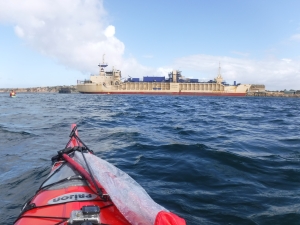
Wasn’t long before we spotted a ship in the distance at Klein Point, moored close inshore. It turned out to be the Accolade II, the Adelaide Brighton Cement (ABC) ship that transports limestone to Birkenhead at Port Adelaide about 4 times per week. We later heard that Simon’s Dad used to be an Officer on the Accolade I and II as well as the Troubridge. Simon has fond memories of attending Christmas parties at ABC as a “little tacker”, so this trip ended up being a very significant paddle down memory lane for Simon.

As we progressed south the coastal formations changed noticeably, with much more of a limestone appearance and not the coloured sedimentary layers.

The next coastal feature was the Lime Kiln Ruin at Wool Bay, looking almost like a small temple when we approached. It is the only one remaining of the six (6) built to produce quicklime by heating limestone, an important ingredient in mortar and brick making in the late 19th Century. The Kiln operated until the 1950’s.

Limestone near Stansbury

Limestone near Stansbury

The next significant structure we encountered was the Port Giles Jetty – 340m in length and Phil said sharks loitered around the end (might be an old surfer’s myth!) so we took the shortcut close inshore. The Jetty and adjacent storage silos are used to store and ship grain from the Lower Yorke Peninsula.

Our next challenge was a crossing of 4 to 5km across Coobowie Bay, in what looked like a 15kn westerly wind, possibly gusting higher occasionally. No more protection from the stunning cliffs so time to put some effort into our paddling. Coobowie Bay is home to the local oyster industry and according to Carol also serves great meals at the local pub – perhaps next trip! We opted for a short stop at a boat launch site prior to tackling the crossing.

Back on water we set course for a prominent group of pine trees in the vicinity of Edithburgh. As expected, the crossing was just a head down slog but we soon made out the brightly coloured Edithburgh Tidal Pool as we approached the shore and the wind eased.

Lime Kiln Ruin at Wool Bay

Lime Kiln Ruin at Wool Bay

We paddled past the Jetty then Boat Harbour and on to Sultana Point Jetty and a small beach we had previously selected as a landing point. After checking in we had a short portage up to a nice grassy unpowered campsite well sheltered from any southerly wind.

Too far to walk to the pub so Abelardo with the tidiest car provided a taxi service. We dined at the Edithburgh Hotel on Edith Street, again a very popular hotel and three (3) of us can recommend the slow cooked lamb shanks.

A stunning evening, couldn’t hear any wind or rain overnight until a light shower just before 7am.

Day 3: Troubridge Island Return

Sail up on our way to Troubridge Island

Sail up on our way to Troubridge Island

Hardly any wind overnight and only light rain before we poked our heads from the tents, very excited about paddling to Troubridge Island for morning tea and coffee, and the conditions looked great with only a light westerly breeze, probably below 6Kn for the 8Km crossing.

The island was named by Captain Flinders in 1802 after the Commander of the Fleet at the Battle of the Nile, Sir Thomas Troubridge.

We rushed through breakfast, loaded the kayaks and moved to the Boat Ramp for our departure. No mucking around, we were keen to be on water to take advantage of the conditions. Things only got better as we approached the Island and wasn’t long before we were paddling in tropical-looking turquoise waters in full sun. The real extent of the shoal was visible about 1.5Km out, tide was approaching high water mark with at least 1m of water as we approached the Lighthouse – perfect!

Troubridge Island

Sail up on our way to Troubridge Island

We were amazed at how extensive the shoal spreads around the Island, very apparent how vessels came to grief in the past.  According to Google there were 33 wrecks and groundings until the Lighthouse was constructed in 1856.

Even managed to try out Phil’s 1m² Pacific Action sail with the light breeze, a lot more relaxing than my 1.5m² but the larger sail would have been perfect with the 6Kn westerly.

The noise of numerous birds greeted us as we approached, we could see a mass of them nesting on the sandbar on the SW end of the Island.

The bright red freshly painted lighthouse stood out, contrasting the turquoise waters and white sands of the shoal.

We set up on the table in front of the Keepers Cottage with an amazing view and the constant sound of the birdlife. I will let the pictures tell the story! How lucky we were with the weather and our visit has inspired us to investigate the possibily of arranging a couple of days’ overnight stay for a future visit.

Coffee and cake at Troubridge Island

Coffee and cake at Troubridge Island

After coffee, cake and a few pictures to capture the moment we were back on water for the return paddle, but not without a circumnavigation to appreciate the size of the bird population.

Wind had picked up on the return as forecast so we settled in for a heads down paddle with the Water Tower as reference point until we got in closer and spotted the boat ramp.

We made good time and were soon back in the safety of the harbour, Abelardo leading the way (having decided to use the last stage for a bit of pace training).

Back in harbour about 2.30pm, Giresh and Phil decided to show off with a couple of celebratory rolls – judging by their reactions the water was cold!  We landed at the boat ramp and soon had the kayaks loaded before heading back to Adelaide.

Giresh left for the west coast of Yorkes for another 2 days of paddling while Abelardo, Phil and Mark set off for the return drive to Adelaide.

Our last day’s paddle completed a perfect trip exploring a section of the coast that we hadn’t paddled before, but a trip we will definitely repeat. Lots of stunning scenery and great to visit the towns of Port Vincent, Stansbury and Edithburgh and compare the squid schnitzels along the Peninsula.

It was great to catch up with club members Carol and Robert and we appreciated the assistance in shuttling cars as well as local advice. Both are involved in preparing for the Salt Water Classic in 2024 for Wooden Boats and Kayaks intending to catch the tide from Stansbury to Port Vincent. Rest assured we would love to be involved and the weekend of 13/14th April 2024 is now in the Club calendar, so consider the date for your long term planning.

Overall Statistics

Conclusion

A fantastic trip so very close to Adelaide CBD with lots of options available, including staying on Troubridge Island. A great future alternative back-up for Wardang Island’s trips or just to add to our paddling calendar.

A great Plan B Phil, well done!

Click on the maps below to download the GPX files

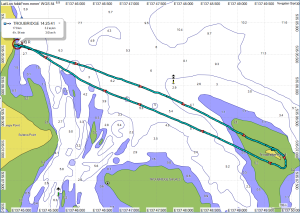
GPS Port Vincent to Stansbury

GPS Port Vincent to Stansbury

Stansbury to Edithburgh

Stansbury – Edithburgh


The Pages Expedition – KI South Coast – 21 – 26 April 2023

Day 1 and 2  – Victor Harbor to Pink Bay via The Pages

Karl Meyer, Ben Weigl, and Tresh Pearce met up at Pink Bay. Ben had earlier paddled solo from Cape Jervis, arranging to camp overnight along with the Adelaide Canoe Club (ACC) crew including Karl and Tresh. He had set up camp there before the weary ‘Pages’ paddlers landed late on Saturday 22nd April.  They had completed an epic ACC paddle from Victor Harbor to Ballaparudda Beach, camping overnight then on to Pink Bay at Kangaroo Island via the ‘Pages’ group of islets in Backstairs Passage. The trip was recently well-documented by Greg Adams from the Club.

Day 3 – Bay of Pinks to Pennington Bay

Breaking wind-against-tide clapotis around Cape Willoughby

The next day saw the trio set off for a further westward adventure around Cape Willoughby and along the South coast of the Island, aiming for Vivonne Bay. The remains of the ‘Pages’ expedition enjoyed a relaxing day before they headed to Antechamber Bay in the afternoon.

After launching and farewelling our comrades and the homely Bay of Pinks, we set our sails in the strengthening but still moderate easterly toward the nearby Cape with the awesome sight of its presiding lighthouse coming shortly into view. We knew we had missed the slack tide conditions and expected the wind-against-tide factor to come into play in rounding the Cape, causing rough sea conditions. This would be on top of the ever-present clapotis from the ocean swells in deep water meeting the sheer boulder cliffs under the lighthouse.

As we approached under full sail, the comments of James Fishers came to mind when he said during his and Dayna’s rounding of the Cape in 2022: that “it was the most hectic sea conditions he had ever paddled in”.  . . . . .  Well, that is pretty much what we experienced too. It was so concentrated and boiling with big breaking slop making for hectic and scary discomfort. I had been around the Cape a couple of times previously, but the conditions were nowhere near as severe then. The sails were good for providing the steady power to make headway through the clapotis paddock, as it seemed as though our paddles weren’t having much effect!  As well as going through the motions of forward stroking, they were being employed in bracing and keeping us upright.

Pennington Bay

Apparently, some or all of the ACC crew were walking to the lighthouse and saw us go through that. Greg Adams later said that seeing us set our sails for Cape Hart once we were through, was an inspiring sight. I’d say that for those of us on the water, once it had all sorted itself out after a km or two, it was more of a relief and then a deep pleasure to find ourselves with a steady breeze behind us, and we were away!

After an extremely pleasant sail around Cape Hart with its magnificent surf rolling onto the reefs, we rounded Black Point then eventually False Cape and were into the big indent of coast of Pennington Bay. The sea was often lumpy, the coastline magnificent.  After False Cape (and Black Point earlier), there are many beaches. So the clapotis disappears for a while and one can mosey along quite close behind the break. They were all breaking very close to the steep sandy shores. – evidence of extremely high-energy beaches. There may have been places to land but we didn’t see them.

Approaching Pennington it was getting on in the afternoon and we briefly looked for a small cove immediately west of the main beach, but couldn’t find it. Sometimes beaches disappear after wild weather, taking time to re-appear as the sand slowly redeposits. We chose the western end and landed through the moderate surf there onto an idyllic setting, sheltered and with the last of the sun disappearing behind the cliffs. It wasn’t cold at all and we were in high spirits at our good fortune in making it safely and very happily during our first leg.

Day 4 – Pennington Bay to Unknown Cove (A real Gem)

Camp in the D’Estrees Unnamed Cove

Shortly after leaving Pennington Bay my rudder became ineffective, a cable issue somewhere. Karl fixed it into a neutral position and I managed to sail and paddle using the stern rudder to keep on course in the steady easterly / northeasterly breeze. I could also keep my hands way off-centre of my paddle to lengthen the stroke on one side if necessary, but we mostly sailed. Upon landing it proved to be easily fixed with a minimum of tools.

Outside of this great little bay there were some awe-inspiring-looking breaks on the protecting reefs which we could get up close to and have a good look at. We waited around for Karl to do some surfing on the shoulders of them – so perfect were they. Alas, although we waited a good while, the sets didn’t return and perhaps we’d drifted from the best spot, so Karl has to wait for another opportunity!

Although none of us had direct experience of this cove, or knew anyone who had landed there (it just looked terrific from satellite maps), our bay turned out to be a real gem. We settled on the southern end of it, and made a delightful camp amid warm balmy conditions. At last we were in pristine country only occasionally visited by walking humans.

Day 5 – Unknown Cove near to bay near ‘Pogaroo’ Bay

That day was to be the pivotal day where we left all land-based accessibility along the Cape Gantheaume Conservation Park wilderness area. It really is heading out into the wild. We still had the most amazing conditions anyone could ever pray for: moderate swell and helpful breezes, not too strong, not too weak!

The little Bay just East of Cape Gantheaume

Not far from the Cape we landed in a little cove for an explore and a break. Now, theoretically there are no reliable unprohibited landing spots for sea kayakers before Seal Bay, meaning that Vivonne Bay should be the next landing. However Phil and Gordon had mentioned this little cove as a possibility (not sure if either of them had visited previously, but both said it was worth a look). It was very good to receive counsel from both of these very experienced expedition sea kayakers at different times before we set off along this Coast, I’m grateful that the accumulated pool of knowledge is so readily shared. We had also referred to the satellite images and seen the possibility, so gave it a go and it was perfect.  Good for camping too….. .. really, I’m talking perfect here. I think it has a large measure of protection from swell, however it would be scarcely visible from the usual half to a one kilometre offshore that most sea kayaking expeditions have to travel due to having to ‘get’ to Vivonne without dilly-dallying (our specialty) and the clapotis.  We had to share the bay with the resident sea lion population though!  We snacked there, and wandered around the breathtaking, but gentle cove, with a tiny hinterland of open shrubland.

Out to sea once more and we soon came to Cape Gantheaume. It is surrounded by many reefs but we paddled around them as the sea was calm. Although not a huge swell, there were many well-formed breaks all around the place.  The swell itself had a long interval and some were definitely 4 metres.  There were areas of reef that we were only 50 m from, a semicircle of Niagara Falls shape.  That is literally what it was like being near them from behind, it was not so much like waves breaking, but more like a waterfall going from high and falling into much lower ‘suck out’.  The continual roar even on this quiet day was ever-present and astounding, a constant reminder that nature is not to be underestimated, ever.

Eventually we come to our chosen landing and camp destination, a bay immediately before ‘Pogaroo’ Bay, which in turn is one bay before the better known Bales Beach. Our bay is the smallest by far of the three, and is protected to some degree. When we approached there were some significant swells rolling through. We spent some time happily watching it all to get the gist of how it works there. I say happily, because to watch is the safe part.  Yes, it had some big surf going on, frightening at times when the sets came. Karl opted to go in first, he threaded his way through, finding the beach exhaust flow in the middle left of the bay where even the big waves didn’t break. (Though we couldn’t see that from where we sat behind the breaks). He promptly set himself up on a high hill with paddle to sign for us go or not go. Very soon after, Ben and I waited for a lull, but the decent sized waves kept coming. Karl, high on the sand hill gestured most assertively with the paddle not to come as he could see what was happening behind us. We didn’t need to be told, we weren’t going anywhere for the time being.  One wave in particular was huge, Karl said later (he’s a longtime surfer) he was guessing at about 10 foot or 3m. Then there was a lull, and I could see the broken water outward with beach exhaust and rip centre left in the tight bay and thought “It had better be a decent lull or I’m cooked!”. It turned out to be what we needed and eventually on the same lull Ben set off inward. No waves broke at all along that line, which does a little dogleg halfway. The swell size seemed to diminish noticeably from that point on. We were all very stoked to have landed so successfully, with no mishap. After recceing the beach and surrounds we re-entered our kayaks to relocate into the very sheltered western corner of the bay a hundred metres away and set up another idyllic camp. The unnamed bay itself is extraordinary in its perfect half-moon shape with a narrow opening to the sea – very beautiful to behold. Being a gloriously warm afternoon helps no end too!!

We were now in the Cape Gantheaume Conservation Park some kilometres from the nearest road, but more recently a walking trail has been established nearby connecting with the D’Estrees end of the Park. From this site it was only approx 20 kms to paddle to Vivonne Bay on the following day, but there was still a lot of exploring to do in the morning even before Seal Bay.

Day 6 – Unknown Cove (near ‘Pogaroo’ Bay) to Vivonne Bay.

In the morning we set off to a much-diminished swell, cruising out of the centre of the bay without so much as a splash, the one to two foot reformed little shore-break near our camp was more splashy than the rip through. Passing the neighbouring larger bay directly adjacent to ours was also beautiful from our route a hundred metres off from its entrance. I was full of emotion as we passed Bales Beach:  so many swims there, and it continues to be a sacred part of my and others’ lives. In 10 days or so I will likely be there once again, and it seemed a bit weird with two completely differing contexts happening to overlap at that place.  The fresh north easterly breeze filled our sails and moved us along nicely toward Vivonne Bay.

With the wind coming in blustery from the NNE (before swinging more NE a bit later) we cleared Bales and the steep rocky cliffy shore once again resumed, though this time relatively protected by reefs a bit offshore.  A couple of micro coves presented themselves for inspection and possible landing. The first immediately after Bales proved a bit too unprotected, where there were dumpy breaks closing out its opening. I have visited there before on foot through the shallows on an exceptionally calm day and it is truly beautiful, and also accessible (just) by land. Has a very interesting honeycombed small stack that can be climbed around in to peep out of various windows!!  Not for today though. Karl and Ben went over to a potentially easier-to-explore area a bit further west, which was a cracker!  I won’t say much more about it, but this was definitely one of the trip’s highlights. Situated just outside the Seal Bay Exclusion Zone, It had a great many resident sea lions of all ages, including a bull. We had lunch and I can’t thank B & K enough for their decision to land there. (Even though in the forefront of my mind was the possible NW strong wind coming in before our scheduled close of play in Vivonne Bay around lunchtime).  This turned out to be a dire headwind, the NE intensified and came in early and made for a raging tailwind for the last hour.

After an interval with the seals and cubs and mammas and all sorts in the water and on the beach, we launched. At the point of launch intention, a mamma seal from the beach decided that she either wanted to inspect our boats a lot closer, or wanted to prevent them from entering the water, and blocked our path!  She was very intent on something, we waited until she drew away a bit. There is a pic of Karl entering the water and she is still a distance away by then but watching very intently. We did everything slowly, quietly and calmly.

Then off around the headland where we went inside the reef breaks threading our way, avoiding the locations where the bigger waves were breaking. There is always some tension at these times, the questioning…  “Have we got this right, or are we paddling into a disastrous trap?”  As we travel we check things out ahead for some distance, making mental notes, sometimes consulting maps for the locations of the reefs etc. And in the end, you either back your intuition using the evidence and visual based info, or be in undecided-land, waiting for a lull or trying to seek more evidence confirmation (sometimes this is the most appropriate) or even make the long back-track for a possible couple of kilometres.

Passing by Seal Bay beach we saw the paying tourists viewing the few seals on display there, whereas just around the corner there were lots (for no cost!) where we had just lunched among them.

Ben Blue Water Sailing, near Seal Bay

The Nobby, (an enormous detached piece of Headland alongside a wide protected channel) loomed up, and I went ahead to position myself where I could get a good pic of Ben and Karl coming through the gap to show the whole massive stack, while having them clearly visible in the gap. It was my one intentional set-up photo. Trouble was, I only casually briefed them as I paddled off. . . .well I waited and waited as they stuck together moseying along doing their exploring and seal watching and filming, while I’m blown further and further away from the desired shot. I back paddle against the wind, they hug the shore at snail’s pace, completely indiscernible, camouflaged against the texture of the Nobby, and the whole of the towering stack no longer in frame with water on each side.  I find myself way behind them and with only rubbish pics to show for it.  I put the phone away, and declare ‘ *@%@$* photography !’ and paddle strongly to catch up.  From there it was only a few kilometres of easy sailing out from the cliffs to a point where we start to work out where we think Vivonne might actually be in the 10 km distance, amid the land on the horizon. Amongst us there were some differences of opinion concerning that, so time to consult the map!

During the last hour we found that heading for the jetty was hectic and exhilarating, but also scary for me as I felt I was going too fast at times. The conditions didn’t allow me to comfortably sheath one of my sails (requiring two hands off the paddle for twenty seconds or so) or just let it flap. I was ahead of Karl and Ben who found the pace perfect, paddling away as well as the effortless sailing. It was the first time I had truly deserted them, I let as much wind out of the sails as I dared, and looked back often and figured there were two of them together to help each in case of mishap, and I’m ahead of them, so that if something happens to me I can sort myself out, or they will see me and assist. When I arrived at the jetty it proved to be inappropriate for our landing needs, so I desailed and waited in the now raging wind for the others.  We beat our way a couple of hundred metres to the boat ramp, which proved ideal in every way.

Return to the Mainland

Three very Happy Paddlers at Vivonne Bay

Our trusted beach greeter Tristan – resident of Vivonne Bay, and later to be ferryman in his car to Penneshaw – was there to welcome us. None of us had ever met Tristan, but through a mutual contact he had kindly agreed to take on the ferryman task. I had been updating him throughout the previous week to firm up a time of arrival.

On the mainland we transferred the boats went to Ben’s ute, and were off into the falling night. Driving through the treed paddocks of Karls’ neighbour as a short cut to his spectacular place on top of the range was a highlight.  Threading through the trees was just like threading through the breaking reefs of earlier in the day ……. a million miles ago it seemed.

Tresh Pearce


The Pages Island Expedition. 21st – 24th April 2023

By Greg Adams

The Pages islands expedition was the brainchild of Phil Doddridge, an ambitious adventure starting at Victor Harbor and ending at Second Valley via Tunkalilla Beach, The Pages, Pink Bay, KI, Antechamber Bay, and Cape Jervis.

The weather gods needed to be on our side, and they were, providing the perfect wind and weather conditions for this epic adventure. The only real problem was a strong ground swell.

Day 1 – Victor Harbor to Ballaparudda Beach

Seven paddlers, Phil and Pat Doddridge, Tresh Pearce, Karl Meyer, Giresh Chandran, Gordon Begg, and I met at the Bluff boat ramp, Victor Harbor at 8am on Friday the 21st of April.

Conditions were perfect, the sun was shining, and the wind was absent. We managed to be on the water and left by 9am passing The Bluff, West Island and rounding Newland Head after 2 hours paddling.

Beach Ballaparudda

Waitpinga and Parsons beaches had a large oily swell rolling in and a grey sky above, creating an eerie atmosphere.

Karl and Tresh paddled in close near the surf zone to experience the power of the swell as we continued approx. 1 km out to sea, waiting for them to join us again at Parsons beach.

Looking for a place to land

Leaving Parsons beach, we realised that landing at Tunkalilla beach with this size swell would be very difficult. There were two options, Callawonga and Ballaparudda beaches, just prior to reaching Tunkalilla. Arriving at Ballaparudda, the closest, 23km from Victor Harbor, it looked quite manageable. We decided that this would be tonight’s camp.

Tresh, Gordon, and Pat successfully made the first landings. Then Karl, I, Giresh, and Phil attempted landing. All capsized in the difficult conditions. Phil’s kayak nosedived into the sand bar causing a fatal fracture in the bow. The kayak was then swept into the rocks on the western shore. All in all, with four in the water it was a disastrous landing attempt. No one was hurt and all gear was salvaged beside the fatally damaged kayak.

Thoughts were with Phil as he had planned the expedition and now, he would have to abandon after only one day on the water.

With Karl’s local knowledge, he managed to wrangle access for his daughter, Sahara to drive down the beach through paddocks to extract Phil and Pat and their kayaks the following morning. Once things settled down, a comfortable campsite was established, and much discussion of the days adventures was had around the campfire.

Day 2, Saturday – Ballaparudda Beach to Pink Bay via The Pages

North Pages

With a healthy respect for Ballaparudda’s sandbar, the remaining paddlers said their farewells to Phil and Pat and headed out through the surf zone one at a time, Tresh leading.

Within 30 min all were out and prepared for the 16km paddle to North Pages Island in calm conditions with virtually no wind. We were heading slightly east of the islands to counter the flooding tide which worked perfectly, paddling in a tight group, and chatting, we headed south. The closest island was reached in 3 hours and there was a reasonable swell running. A fishing boat was anchored nearby, and we explored the lee of a barren, guano covered, granite island. Australian Sea Lions, screaming Gannets and Terns greeted us, this is a wild place!

Heading around the eastern side to the southern islands, we encountered clapotis waves which kept us very alert. As we paddled between the islands, large boils were appearing indicating submerged bombies. Not a place to hang around. The southern island had a lighthouse and tower. It seemed smaller but just as inhospitable. There is meant to be a place to land on one of the islands, but it was not obvious. A quick feed and discussion and we then headed to Cape Willoughby, 16km away.

To Cape Willoughby

For the first hour we had amazing conditions, blue sky and oily seas and paddling with a flood tide, 7 kph was a comfortable pace. We noticed the tide was drawing us towards Antechamber Bay and on this course, we were potentially going to run into a dangerous shoal called “The Scraper”. Gordon made the decision to head for Cape St Albans. The sea and wind picked up as we got closer to St Albans. We were then working hard against the flood tide to try to get to the cape. The tide was about to change but we were fighting a strong current. My computer was telling me we were not making much headway.

Once we got close to Cape St Albans the tide went slack and we had a beautiful 4km paddle along the cliffs to Pink Bay in the late afternoon. A 16km paddle turned into 24km taking 4.5 hours.

Pink Bay is paradise! (don’t tell anyone). Camp was set and I found out that I had left my tent poles and pegs back at the previous camp. Ben Weigl joined us, paddling from Cape Jervis to Pink Bay in 4.5 hours. He, Tresh, and Karl were going to leave us and explore the south coast of KI the following day, Giresh, Gordon, and I were heading to Antechamber Bay. A beach campfire rounded out a big eventful day.

Day 3, Sunday Pink Bay to Antechamber Bay

Pink Bay from Gazebo

We bid farewell to Tresh, Karl, and Ben at 9am the next morning and we went for a walk to Cape Willoughby. From the lighthouse we could see the trio sailing towards Cape Hart, an awesome sight.

We spent a leisurely morning exploring the lighthouse and surrounds returning to camp for lunch and a departure to Antechamber Bay by 1pm to catch the end of the flood tide. It was nice to have a bit of a rest day and only a couple of hours on the water. Passing Cape St Albans was exciting with lots of turbulence and at times travelling with the flood tide at up to 9.5 kmph. An awesome beach camp was made in Antechamber Bay on a glorious afternoon. A walk up the river and through the campground then back along the beach was the end to another perfect day.

Day 4, Monday – Antechamber Bay to Second Valley

Steam rises from the sea at sunrise, Antechamber Bay

Phil had contacted us and had decided to paddle down to Cape Jervis (from Second Valley), wait for us and complete the final leg together. The tide was due to flood at 10.30am. Gordon recommended that we head off at 9am and get as far across Backstairs Passage before the flood tide kicked in and assist us to Cape Jervis and beyond.

The sea was like a mill pond and the first 2.5 hours were a dream. But nothing is ever that easy. 8km from Cape Jervis, a 15kt (27km) northerly head wind blew against the flood tide. The sun was in our eyes and the sea was a crazy mess. It was a tough 1-hour + slog to the shelter of Cape Jervis. It felt like we were not moving but with the flood tide we were easily travelling at over 7kph and at one stage at 10.5kph. What a relief it was to paddle into the harbour and meet Phil, who was lounging on the beach in glorious sunshine. A stark contrast to where we had been.

After a 1-hour break, we headed around the corner and into the gulf. The plan was to camp on Morgan’s beach or a smaller one further north but because of the long weekend, Morgan’s was crowded with car campers. So, we decided to press on and with light winds, sunshine and a following tide, paddling cannot be better.

Because of the high tide the second beach option was not suitable, so decided to press on to Second Valley. We landed at 5.30pm on a balmy evening, finishing the expedition with the final night spent in Giresh’s holiday shack. Perfect.

Overall Statistics

  • Day 1, Friday – Victor Harbor to Ballaparudda Beach – 4 hrs, 23km
  • Day 2, Saturday – Ballaparudda Beach to Pink Bay via The Pages – 7.30 hrs, 40km
  • Day 3, Sunday Pink Bay to Antechamber Bay – 2 hrs, 10km
  • Day 4, Monday – Antechamber Bay to Second Valley – 7.30 hrs, 40km
  • Total distance travelled 113km,
  • 21 hours paddling including breaks on the water.
  • Average moving speed 5.8kph over the 4 days.

Departing from Cape Jervis

Crossing Backstairs Passage – Cape Jervis to Antechamber Bay and Return — 18/19th March 2023

The adrenaline has finally stopped racing through my veins to allow me to tackle the promised trip report of our crossing of Backstairs Passage to Antechamber Bay and return on the weekend of 18/19th Mar 2023. What a paddle, with a SE gusting to 20Kn and seas over 2m at some stages. All paddlers did extremely well without any incidents, but special recognition should go to our two crossing first-timers: Abelardo Pardo and Simon Delaine.  Talk about jumping into the deep end!  Conditions in Antechamber Bay didn’t look too bad at departure, but steadily escalated during the return crossing.

Preparations

It was a great turn-out with twelve (12) paddlers participating. The trip was led by Phil Doddridge with Charlie Walker, Matt Eldred, Mark Loram, Mike Dunn, Peter Vincent, Anthony Aardenburg and Bella, Tresh Pearce, Abelardo Pardo, Simon Delaine and recent member Karl Meyer following Phil’s lead. Similar to our crossing in March 2022, the trip was aimed at demonstrating the splitting of the tide to achieve the most efficient crossing.

Four of the group (Mark, Simon, Abelardo and Phil) drove down on Friday Night and camped at the Cape Jervis Caravan Park ready for an early morning start. We used this site when training for our Bass Strait crossing and had fond memories of relaxing amongst the pines at the rear of the Park overlooking Backstairs Passage.

A lovely evening soaking up the view and not a ripple seen looking over to Penneshaw. In the evening the highlight was looking up towards the sky and counting the satellites passing overhead – I have never seen so many, there seemed to be a continuous stream passing just below the Southern Cross. A strong wind came up overnight which eased in the morning, but which probably should have been a warning of an approaching front.

Day 1 — The easy one

Enjoying the crossingUp and about around 6am and met the remainder of the group at Cape Jervis Boat Ramp in time for an 8.30am on-water start.

After loading kayaks (I overdid the equipment list again!) and after the safety briefing from Phil we set off at about 8.45am, following the coast east to Lands End to avoid the ferry’s path. We then set our bearing for Cape Coutts and headed out on our adventure, with a few whitecaps between us and the safety of Antechamber Bay; just east of Cape Coutts we were on our way.

A pleasant paddle across but no wind advantage which disappointed those with sails in the group, just a solid slog for 5 hours before we made Antechamber Bay, even explored a bit of the sandy beach to eventually reach Chapman River. Just checking that the mouth hadn’t moved!

Many hands made light work of the portage across the beach and we were soon paddling up the picturesque Chapman River, admiring the paper bark trees and new bridge as we approached campsite no 12 that Mike had kindly booked.

Setting Camp

After setting up camp most of us relaxed, enjoying the location while others went paddling to explore the upper reach of the Chapman River.

Once again the campground was pretty busy so we made an early appearance at the camp kitchen, admiring the stunning views. We had a very pleasant evening there – night solar lights might be handy, a note for future trips! The kitchen is very well set up and we spent the evening discussing kayaking adventures while being entertained by Tresh’s attempts to get his cooker operational.

Soon after we turned in and slept well, being serenaded by several Boobook Owls during the night. In the morning some fairy wrens visited, very elusive but I did manage to get a couple of pics as they checked out my tent.

Day 2 — The not so easy one

On our way to Antechamber BayNo rush in the morning with the plan to be on-water in Chapman River by 10am, bit of drizzle overnight and the additional time was put to good use sponging the tents and gear and getting packed up.  We said our farewells as we paddled under the KI version of Sydney Harbour Bridge and down to the mouth for another portage. The waters in the bay looked calm but the forecast for the crossing was increasing winds 15 to 20Kn SW. The sky towards Deep Creek threatened to bring squalls during our crossing.

The briefing was a bit somber and Phil gave the group the option of returning via the Penneshaw ferry instead of attempting a borderline crossing – we all mulled it over but the mutual decision was to paddle the return as the group was fired up to complete the crossing. These sort of situations are always difficult with experienced kayakers, particularly with several having done crossings in similar conditions.

We split into sail-assisted kayaks and those just going with the swell, although on the starboard beam. We headed off together before separating into two groups, with those sailing heading directly across the passage towards Deep Creek before following the coast back to Cape Jervis while our group of five (5) made a beeline for Cape Jervis. There was no time to relax on the four (4) hour return paddle, it certainly required continuous attention.  Phew, all back in the safety of Cape Jervis boat ramp by 3pm.

Arrived

Together in the bakerySunday’s return crossing was by far the most challenging that I have done and I breathed a sigh of relief when we all arrived back at Cape Jervis safely, with the sailors having arrived about 15 minutes prior to the non-sail group.

Looking back, the return paddle was probably borderline, but to achieve the crossing without incident is a credit to the experience within the Adelaide Canoe Club. This is due to regular sea kayak training provided to Club members over several years particularly from Phil Doddridge, Bernard Goble and Peter Carter. All of the group are also regular paddlers, both at Club events and privately, regularly working on improving their skills. The paddlers conducted themselves in a very professional manner exhibiting a good appreciation of group dynamics to ensure we all remained safe.

All of us wanted to celebrate and swap stories, so we adjourned to the Yankalilla Bakery to debrief. And yes, the adrenaline was flowing strongly for quite a while afterwards!

Braving the waves in West Beach

Paddling on a Winter Day in Summer

Impromptu Paddles through WhatsApp

A bit of winter weather in the middle of summer doesn’t stop Adelaide Canoe Club members from braving the unseasonably weather. We cancelled the Thursday Evening Skills session at Tirana Way. But this was soon replaced with an impromptu surf session at the Adelaide Sailing Club on 5/Feb.

The surf was rolling in along the coast. Charlie posted an ad hoc surf session in our WhatsApp channel, and therefore, outside of the calendar. The unpredictable weather is showing that this channel is allowing  paddlers to connect and get out on water. At the time of writing this post, the channel has 43 club members.

The winter day

We had Charlie Walker, Bella and Anthony (and Leigh), Giresh Chandran and Mark. We were braving the 25 knots plus winds with the sand blasting in our faces (and on the cars)!

Braving the waves in West Beach

Conditions looked challenging when we arrived at 5.30pm. We decided to use the protection of the Boat Ramp rock wall with some good waves forming inside the harbour. Lots of surfers were just outside the northern rock wall, so we didn’t want to encroach on their turf.

We launched from the southern end of the beach and gradually made our way outside the harbour to experience the swell. Confidence gradually built as we paddled further out (some further than others).

When Charlie, Anthony, Giresh and Leigh warmed up they managed several successful runs into the beach – most without mishap – the pictures tell all!

Well done to Giresh on successfully managing to control his kayak in the soup zone with some perfect looking bongo runs onto the beach. Pretty impressive having only been introduced to low support strokes at the previous evening skills session at Tirana Way.

The adrenalin was running after we finished and cleaned up, so we adjourned to the protection of the Sailing Club to debrief and plan the next adventure, perhaps from Noarlunga depending on the interest from Club members.

Kayaks in the beach in Coffin Bay

Coffin Bay — 7-11 November 2022

Head wind

The weather forecast for the week at Coffin Bay National Park was looking great as Bernard, Francis, Charlie, Marina and Anne set off from Coffin Bay township on Monday 7th November. With a 10-15 knot north easterly wind we paddled along the cliff edge on the northern side of the Bay We gained some advantage from the easterly component and sheltered from the northerly aspect until we crossed Mount Dutton Bay. The wind hit us again as we crossed above The Brothers Islands and made our way along the coast to Black Springs campsite. It wasn’t long

Seal behind a 2 person kayak with two sails up

Seal playing with the kayak at Coffin Bay

before we had set up camp and were relaxing.

Trying to get to Point Longnose

The plan for Tuesday was to paddle around Point Longnose and make our way to Morgans Landing camp. However, the forecast calm wind turned into at least 15 knots from the north and the swell was predicted to be about 2m. We battled into the head wind through the oyster farm to Point Longnose and beached the kayaks on the more sheltered side. Francis and Marina looked after the boats while Bernard, Charlie and Anne went to check conditions on the exposed side. The wind was very strong and it was whipping up waves which would have been breaking side-on to us along Seven Mile beach.

Back top Black Springs to see the eclipse

To continue would have given us about 12 km of very difficult paddling so we decided to retreat back to Black Springs. While we were checking conditions around Point Longnose a large wave and strong gust launched Charlie’s kayak back into the sea and quickly took it out of reach. Marina jumped into her kayak and managed to grab it but without a tow line to return it to the sandbar. She was stuck in waist deep water with a deep trench between her and the sandbar. We needed to work out how to reunite Charlie and his kayak. Bernard and Frances managed to ‘deck carry’ Charlie out to Marina and then it was easy to get everyone back into kayaks.

Moon eclipse in Coffin Bay

Moon eclipse in Coffin Bay

The strong northerly wind made sailing back a great option for those with sails. Anne and Marina decided to go around the coast while Bernard, Francis and Charlie planned to sail directly back. Luckily we did a radio check before we split the group and we had not gone far when we had radio contact that Charlie’s rudder wasn’t working and we collected together on the beach for repairs. That sorted we returned to camp, more or less as a group with some sailing nearer camp. In the evening as we walked along the beach we noticed the moon rising, but it didn’t look right. We checked Google and discovered we were seeing a total eclipse of the moon in progress.

Heading back

Wednesday’s winds were predicted to be even stronger and we woke up to rough seas and about 27 knot winds so we opted for a bushwalking day and visited the lookout to Black Rocks in Avoid Bay. We walked a little further along the cliffs and found an enormous Osprey nest perched on a rocky island, with the resident bird standing on top of it.

The wind forecast for Thursday was a westerly (tail wind returning to Coffin Bay) and Friday was back to easterly (head wind returning to Coffin Bay) so it didn’t take much discussion to pick Thursday as our last day. With a good tail wind we made our way along the coast then across to The Brothers Islands to check on the birds and seals there. There was one seal that swam around our kayaks checking us out as we photographed it.

Day paddle from Victor Harbor to Port Elliot return — 1 October 2022

Finally some sunshine!

Port Elliot

After months of cold and rainy conditions, the weather gods finally smiled on us. We had a warm sunny day as we launched our kayaks from the Kent Reserve at Victor Harbor for a trip to Port Elliot and back.

The water was fairly calm while we were sheltered behind Granite Island. We could see though lots of spray and white water out to sea, indicating that the forecast of 2m swells was probably correct. Sure enough as we emerged out into the open ocean the swells started to pick up, luckily they were big lazy, slow moving swells that gently picked the kayak up and lowered it as it passed underneath.

That changed as we approached Port Elliot and navigated the entrance between Pullen Island and the rocky headland. The breaking swell was creating lots of rebound waves and interesting conditions, compounded by the swell picking up in the shallower water and creating some surf-able waves. Luckily no-one was brave enough to try, and we landed safely near the new lifesaving club for lunch.

Visitors

Victor Harbor

Mark Loram, the club president, joined us for lunch as he was in the area visiting friends. He was unable to join the paddle due to family commitments. After a nice relaxing lunch and chat in the warm sunshine on the beach we climbed back into the kayaks for the return trip.

This time we went around the outside of Pullen Island for a change of scenery, which was interesting due to all the rebound waves on the ocean side of the island, even worse than when we came in. Nothing too serious, but not conducive to taking your hands of the paddle to take photographs!

We were expecting the conditions to improve as we moved away from the rocks into the more open sea.  But, for some reason, the unsettled conditions persisted all the way back to the shelter of Granite Island, resulting in frequent correcting strokes and bracing. We were all very glad to get out of the kayaks after getting back to Victor Harbor after 3 ½ hours, having done a round trip of 18 kms.